June 3, 2026 · Wednesdays
The School of Repair
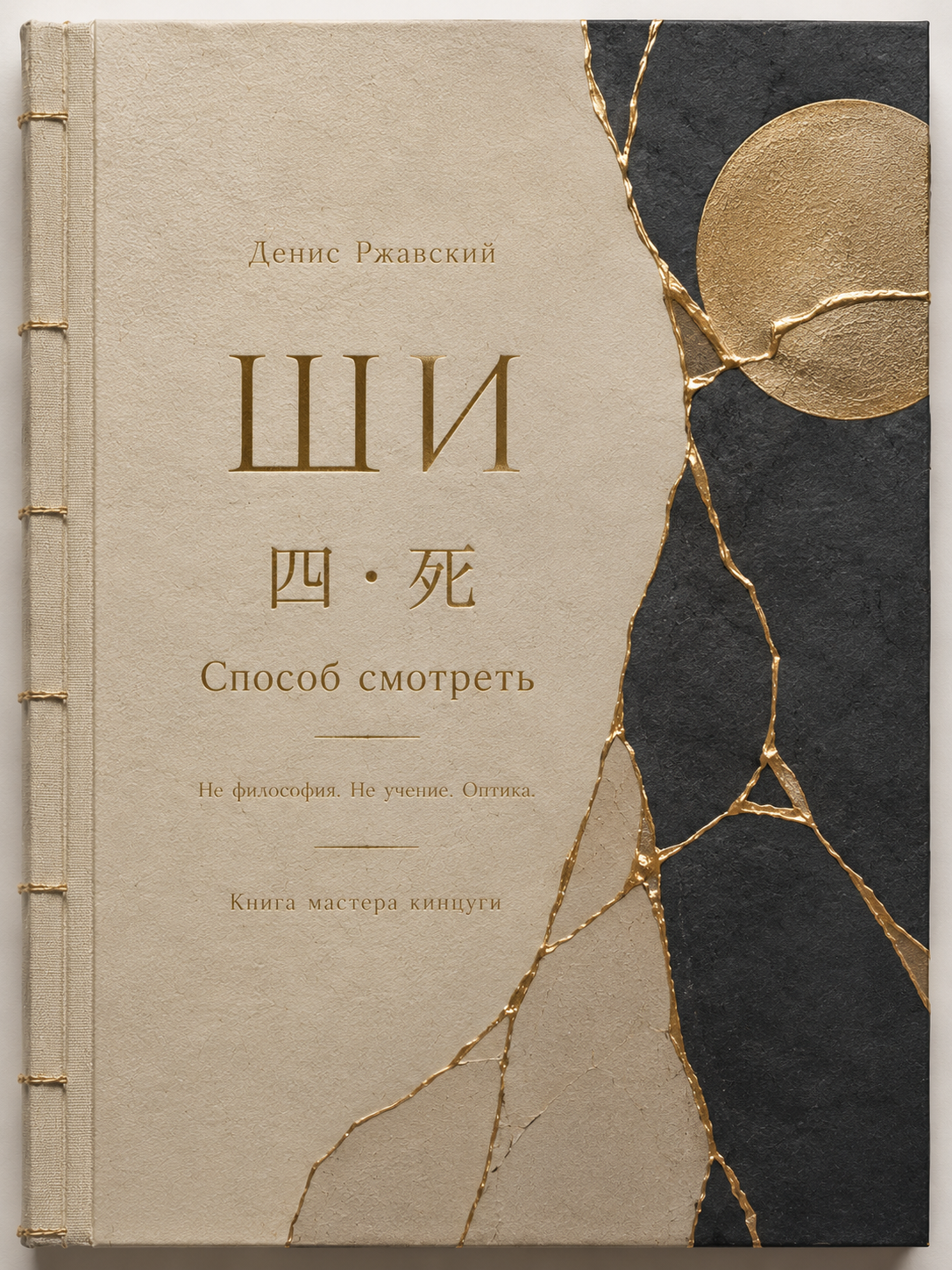
Школа починки.
People break.
Not in a metaphor — actually. After loss, after war, after exhaustion, after years of speaking a language no one answers, after the small slow disappearances that make up most lives.
Kintsugi knew this. A bowl breaks. You can throw it away, or you can join the fragments with gold and treat the fracture as part of the form. The vessel becomes more valuable than it was before the fall.
But ceramics are easy. People are harder.
The repair of a person is slower, less visible, and almost always done with materials that look, from the outside, like luxury — music, paintings, architecture. From the inside, those same materials work as medicine.
Three teachers.
Music repairs time.
When inner rhythm breaks — after grief, after disappointment, after long months in a flat tempo — music returns it. It enters the body before the mind. It rebuilds the seconds. A song is a small private device for fixing time.
Painting repairs sight.
A real painting is not decoration. It is a training of the eye. After enough screens, after enough scrolling, we forget how to look. A canvas teaches us back. To stand in front of a painting is to remember what looking used to be.
Architecture repairs space.
A good building holds a person up when their own foundation is unsteady. Walls, light, proportion, ceiling height — these are not aesthetic preferences. They are external skeletons. A cathedral, a temple, a well-built room can carry someone through a difficult month without speaking a single word.
These three are the teachers in the school of repair.
A school of this kind is not therapy. Not religion. Not entertainment. It is a place where a person learns slowly, by being near things that were made with care.
Kintsugi Gallery is a school of this kind.
Its teachers are the works. Its lessons are silent. Its diploma is a slightly more whole life.
You do not enroll. You walk in. You stand in front of a painting. You let a song play through the room. You touch an object that has been signed by a hand on the other side of the world.
The gold enters through the cracks.
The first book of the school
SHI · ШИ 四 · 死 — four, and death.
The first book by Denys Rzhavskyi, the Master of Kintsugi. A way of seeing — not philosophy, not doctrine. Optics.
It rests on four pillars — love (愛), death (死), time (時), presence (在) — and on kintsugi: the gold seam that does not hide the break, but lets it show. The chapters are short. Each ends in a single sentence to carry away. It is made to be read the way it was made — slowly, one chapter at a time.
The book is not for sale yet. It opens first in Russian, and reaches the major platforms at launch for around $4. An English edition is being considered.
But the first forty readers receive the ebook free on release day.
Every Wednesday, another stone. Another ripple.
— Evgeniy, Kostiantyn, Denys